 Supervisor with "NSX + DTGW/VNA"
This section describes the procedures for Troubleshooting Network Services into the VKS Namespace utilizing an "NSX + DTGW/VNA" architecture inside a vSphere environment.
- Packet Walk
- App Access Broken
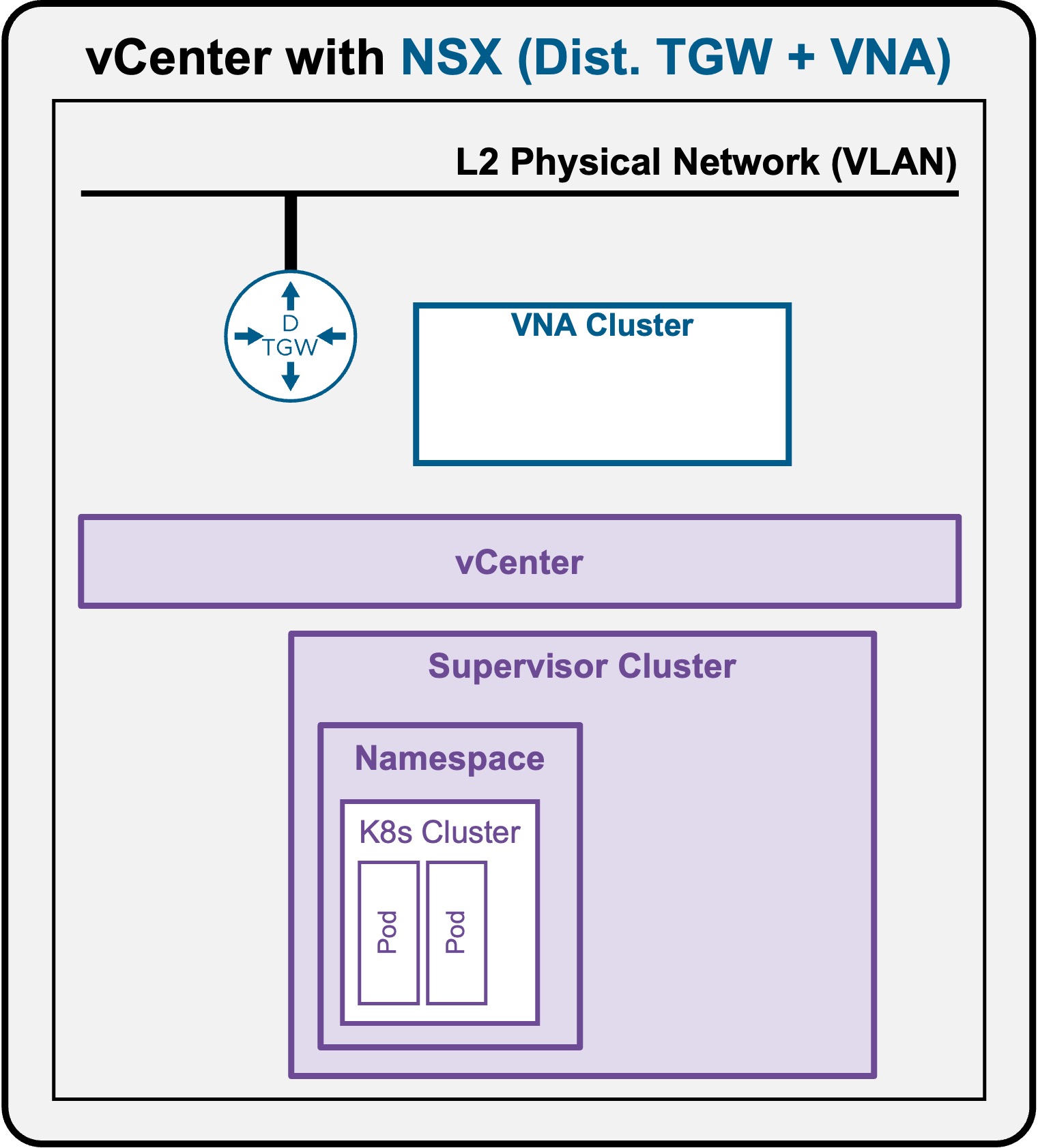
Packet Walk - E/W pod to pod
A Full Application (Load Balancer + Pods) has been deployed (see Application Deployment > App Deployment (K8s) > via CLI).
View
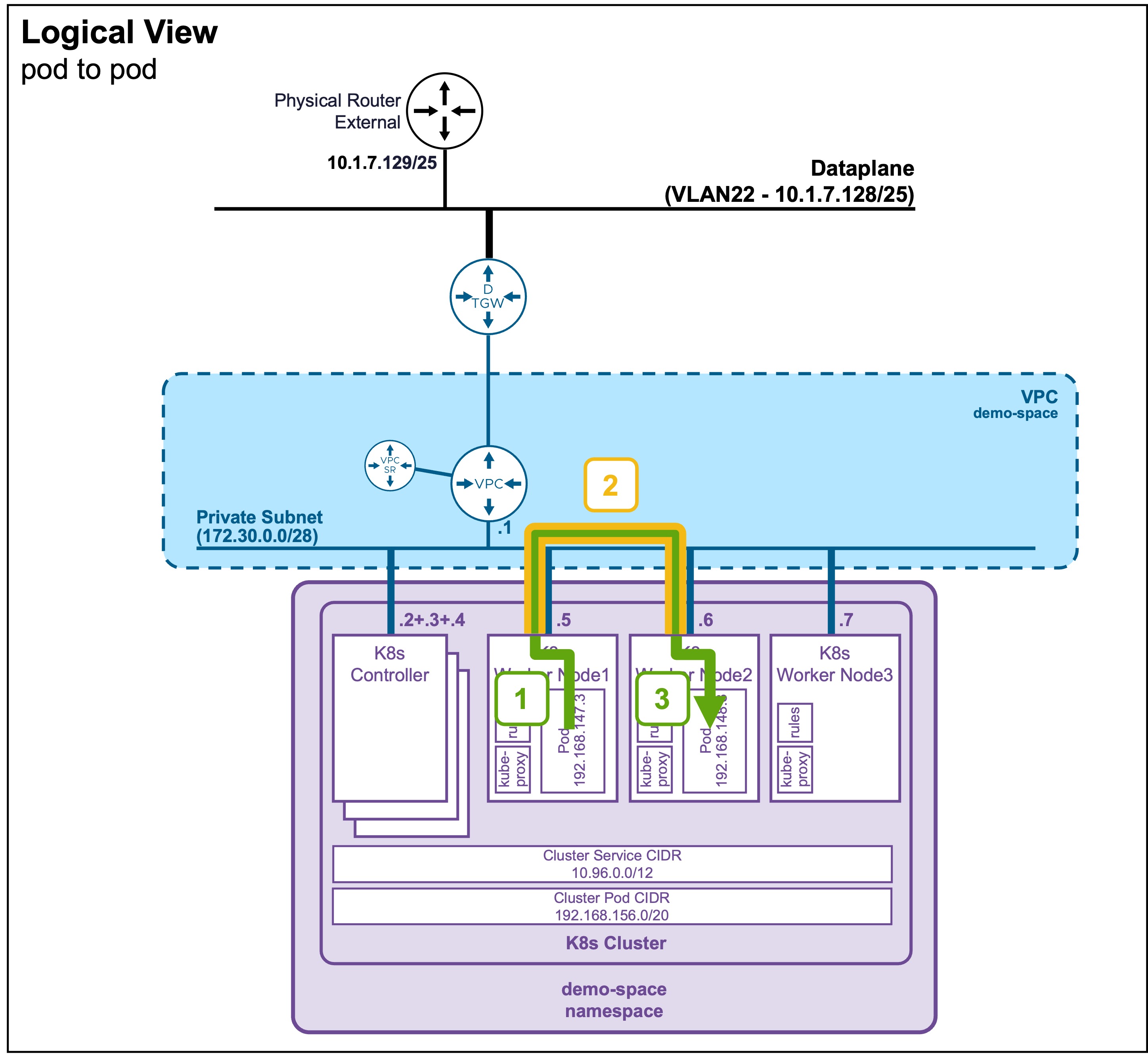
Logical View
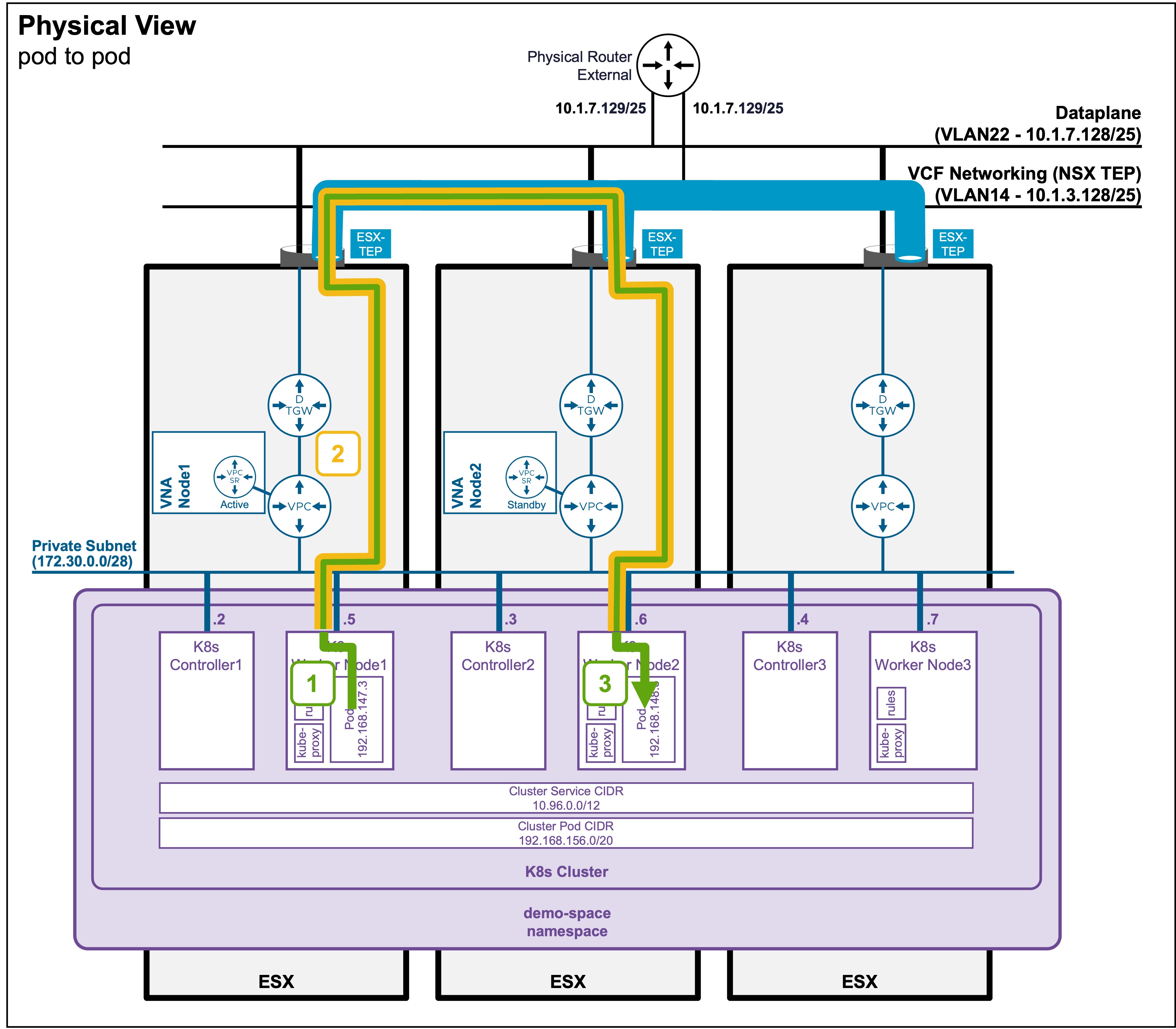
Physical View
Packet Walk Explanation
-
Step 1: Traffic leaves the Source Pod
Source-Pod-IP (192.168.147.3) => Destination-Pod-IP (192.168.148.3)The traffic exits the source pod and hits the Worker Node's local routing engine (managed by
kube-proxyand the CNI agent, such as Antrea). -
Step 2: Cross-WorkerNode Encapsulation
WorkerNode1-IP (172.30.0.5) => WorkerNode2-IP (172.30.0.6)

  [Source-Pod-IP (192.168.147.3) => Destination-Pod-IP (192.168.148.3)]
Because the destination Pod resides on a different node, the source Worker Node encapsulates the original packet inside a node-to-node tunnel packet.
Encapsulation for Cross-ESX Traffic
If the Worker Nodes reside on a different ESX host, the cross-ESX traffic undergoes a second layer of encapsulation using the ESX TEP IPs.
ESX-TEP_IP (10.1.3.x) => ESX2-TEP_IP (10.1.3.x)

  [WorkerNode1-IP (172.30.0.5) => WorkerNode2-IP (172.30.0.6)]

[[Source-Pod-IP (192.168.147.3) => Destination-Pod-IP (192.168.148.3)]] -
Step 3: Destination Node Decapsulation and Delivery
Source-Pod-IP (192.168.147.3) => Destination-Pod-IP (192.168.148.3)The destination Worker Node receives the node-to-node packet and strips away the K8s encapsulation header.
The local routing rules then deliver the unencapsulated packet directly into the destination Pod's network interface.